

2026 GMC Terrain Elevation in Hamilton, MT
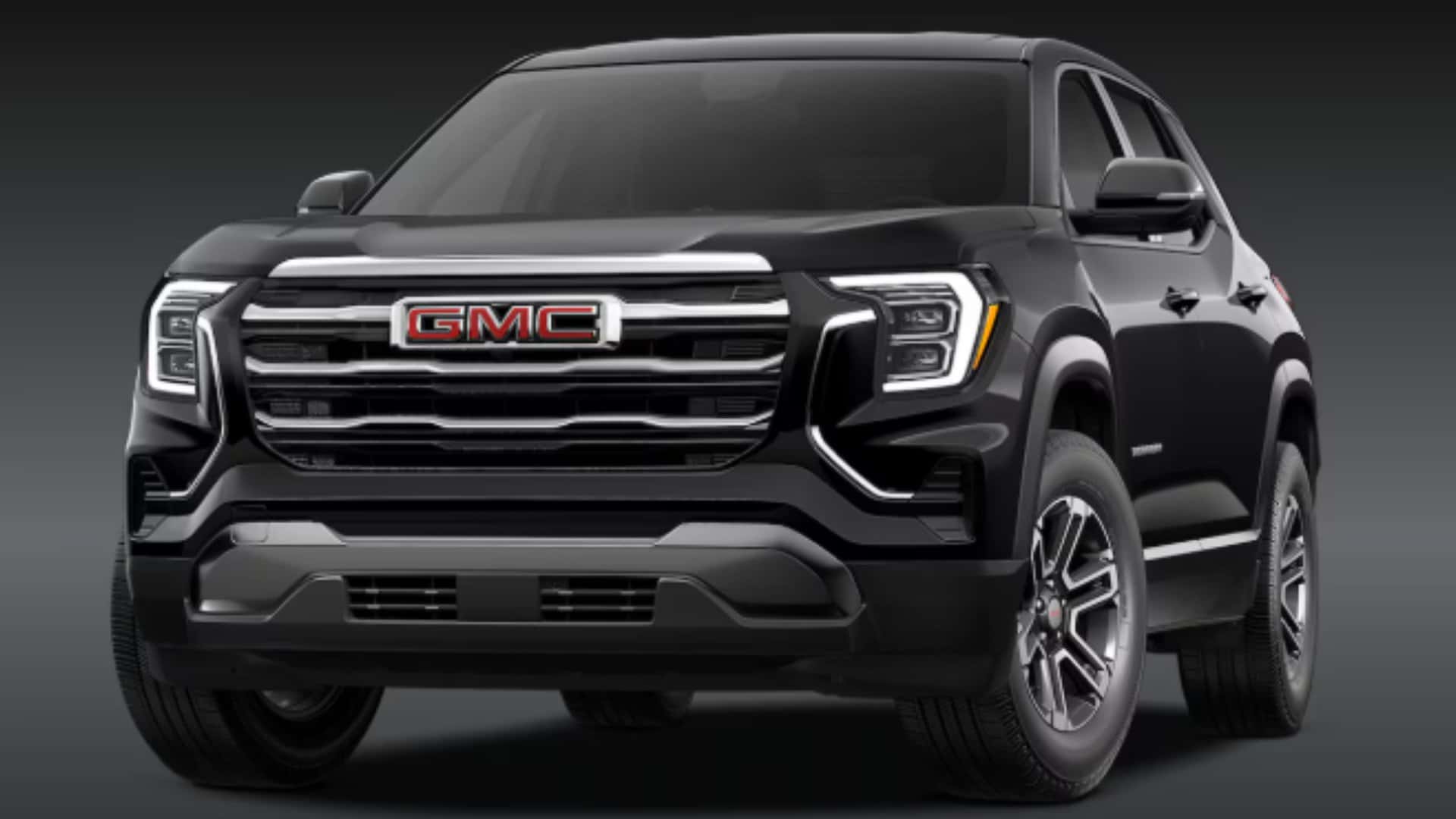
The 2026 GMC Terrain Elevation is a five-passenger compact SUV offered with front-wheel drive or all-wheel drive. Both configurations use a 1.5-liter turbocharged four-cylinder engine, although their transmissions, torque outputs, fuel capacities, curb weights, and trailering ratings differ. The Elevation also combines independent suspension hardware, electric power steering, four-wheel disc brakes, and several wheel configurations within clearly defined exterior dimensions. Its two-row cabin provides measured passenger space and up to 63.5 cubic feet of cargo volume behind the first row.
Turbocharged powertrain and drivetrain configurations
The 2026 GMC Terrain Elevation uses a 1.5-liter turbocharged four-cylinder engine in both front-wheel-drive and all-wheel-drive configurations. The engine has a bore and stroke of 2.9 by 3.4 inches, equivalent to 74.0 by 86.6 millimeters. GMC constructs both the engine block and cylinder head from cast aluminum. Dual overhead camshafts operate four valves per cylinder, establishing the engine’s valvetrain configuration. Direct injection manages fuel delivery across both drivetrain options.
Front-wheel-drive performance and transmission
In the front-wheel-drive 2026 GMC Terrain Elevation, the 1.5-liter turbocharged engine produces 175 horsepower, or 131 kilowatts, at 5,600 rpm. Torque output reaches 184 pound-feet, or 250 newton-meters, from 1,750 to 4,800 rpm. GMC pairs this version of the engine with a continuously variable transmission. The front-wheel-drive configuration has a listed axle ratio of 5.81.
EPA fuel-economy estimates for the 2026 GMC Terrain Elevation FWD are 26 mpg in the city, 28 mpg on the highway, and 27 mpg combined. Its approximate fuel capacity measures 14.8 U.S. gallons, or 56.0 liters. The front-wheel-drive model has a curb weight of 3,446 pounds, equivalent to 1,563 kilograms. Its gross vehicle weight rating is 4,630 pounds, or 2,100 kilograms.
All-wheel-drive output and eight-speed transmission
The all-wheel-drive 2026 GMC Terrain Elevation also produces 175 horsepower, listed as 131.3 kilowatts, with peak output occurring at 5,800 rpm. Its torque rating increases to 203 pound-feet, or 275.0 newton-meters, available from 2,000 through 4,000 rpm. An eight-speed automatic transmission replaces the continuously variable transmission used in the front-wheel-drive version. The eight-speed configuration carries a 3.47 axle ratio. The AWD model therefore has its own transmission, torque range, and axle specifications while retaining the same engine displacement, construction, valvetrain, and fuel-delivery system.
EPA estimates for the 2026 GMC Terrain Elevation AWD are 24 mpg in the city, 28 mpg on the highway, and 25 mpg combined. Approximate fuel capacity rises to 15.6 U.S. gallons, or 59.0 liters. The AWD Elevation has a listed curb weight of 3,598 pounds, equivalent to 1,632 kilograms. Its gross vehicle weight rating is 4,850 pounds, or 2,200 kilograms. These figures provide clear distinctions between the two drivetrains without changing the 2026 GMC Terrain Elevation’s seating capacity or primary exterior measurements.
Chassis, steering, braking, and wheel equipment
The 2026 GMC Terrain Elevation uses a chassis layout built around independent suspension components and electrically assisted steering. A MacPherson® strut suspension supports the front of the Elevation, while a four-link independent suspension serves the rear. This suspension configuration applies to both front-wheel-drive and all-wheel-drive Elevation models. Dual-pinion rack electric power steering supplies steering assistance. The turning circle measures 37.1 feet, or 11.3 meters, giving both drivetrain versions the same published turning measurement.
Brake system specifications
Four-wheel disc brakes provide the braking hardware for the 2026 GMC Terrain Elevation. The system includes E-boost along with antilock braking and electronic stability control functions identified as ABS and ESC. The front brake specification uses 16-inch ventilated rotors measuring 300 by 26 millimeters. At the rear, 16-inch solid rotors measure 288 by 12 millimeters. This arrangement combines ventilated front components with solid rear components while applying disc brakes at all four wheels.
The 2026 GMC Terrain Elevation’s curb-to-curb turning diameter remains 37.1 feet, or 11.3 meters, with the listed 17-inch wheels. The same 37.1-foot measurement applies when the model has 19-inch wheels. GMC lists 17-inch wheels as standard equipment for the Elevation. Available configurations include 19-inch wheels through the Elevation Premium Package and 19-inch wheels with the Black Edition. These wheel offerings retain the same published turning diameter across the documented 17-inch and 19-inch applications.
Exterior measurements and functional geometry
The 2026 GMC Terrain Elevation maintains the same principal exterior dimensions in FWD and AWD configurations. Wheelbase measures 107.48 inches, or 2,730 millimeters, while overall length reaches 181.00 inches, or 4,597 millimeters. Overall width is 74.5 inches, equivalent to 1,893 millimeters. Overall height without the luggage rack and antenna measures 66.1 inches, or 1,679 millimeters. These published measurements establish a consistent exterior footprint for both 2026 GMC Terrain Elevation drivetrain choices.
Front track width measures 63.8 inches, or 1,620 millimeters. Rear track width is slightly greater at 63.9 inches, or 1,622 millimeters. Minimum ground clearance measures 7.7 inches, equivalent to 196 millimeters. GMC publishes these dimensions without optional equipment or accessories installed. Additional equipment or customer-requested accessories can create minor dimensional changes.
Approach, departure, and breakover angles
The 2026 GMC Terrain Elevation FWD and AWD share the same listed approach, departure, and ramp breakover angles under nominal curb ground conditions. The approach angle measures 19.3 degrees. The departure angle is 24.6 degrees. The ramp breakover angle measures 18.4 degrees. These values document the relationship between the vehicle’s exterior geometry and the ground at its front, rear, and midpoint.
The identical angle ratings complement the shared wheelbase, length, width, and ground-clearance measurements of the two Elevation configurations. Drivetrain selection does not alter the published approach angle for this trim. It also leaves the documented departure and ramp breakover measurements unchanged. This dimensional consistency allows the FWD and AWD versions to retain the same basic body geometry. Differences between the two configurations instead appear in their transmissions, axle ratios, fuel capacities, curb weights, gross vehicle weight ratings, and trailering capacities.
Passenger space, cargo volume, and trailering
The 2026 GMC Terrain Elevation seats five people in a two-row configuration, with capacity divided between two front occupants and three rear occupants. Front-row headroom measures 40.0 inches, or 1,015 millimeters, while second-row headroom measures 39.2 inches, or 995 millimeters. With the sunroof configuration, front headroom measures 38.2 inches, or 970 millimeters. Second-row headroom with the sunroof measures 37.80 inches, or 960 millimeters.
Shoulder, hip, and legroom dimensions
Front-row shoulder room in the 2026 GMC Terrain Elevation measures 57.7 inches, equivalent to 1,465 millimeters. Second-row shoulder room measures 55.7 inches, or 1,415 millimeters. Hip room is listed at 55.2 inches, or 1,403 millimeters, in the first row and 50.8 inches, or 1,291 millimeters, in the second row. Front-row legroom measures 40.6 inches, equivalent to 1,030 millimeters. Second-row occupants receive 39.2 inches, or 996 millimeters, of listed legroom.
These dimensions provide a detailed account of how the cabin distributes space across its two seating rows. The first row has 1.4 inches more legroom than the second row based on the published measurements. Shoulder and hip dimensions also vary by row, with the front measurements exceeding their corresponding rear values. Headroom decreases in both rows when the vehicle includes the sunroof configuration. All listed passenger-space figures apply to both FWD and AWD versions of the 2026 GMC Terrain Elevation.
Cargo and towing specifications
Cargo volume behind the second-row seat measures 29.8 cubic feet, or 843.84 liters. Folding the second row expands cargo volume behind the first-row seat to 63.5 cubic feet, equivalent to 1,798.1 liters. Cargo and load capability remain subject to weight and distribution limits. The published cargo measurements are identical for front-wheel-drive and all-wheel-drive Elevation models. These two volume ratings identify the available capacity with the second row in use and the expanded capacity behind the first row.
The front-wheel-drive 2026 GMC Terrain Elevation has a maximum trailer weight rating of 800 pounds, or 360 kilograms, with a ball hitch and the required trailering equipment. The all-wheel-drive model raises that maximum rating to 1,500 pounds, or 680 kilograms. GMC calculates these ratings for a standard-equipped vehicle with a driver and the required trailering equipment. Optional equipment, passengers, and cargo reduce the maximum trailer weight the vehicle can tow. The recommended trailer tongue load equals 10 to 15 percent of the trailer’s weight.
Visit Quality Motors of Hamilton for a Test Ride
A closer evaluation of the 2026 GMC Terrain Elevation can connect its published specifications with its operation from the driver’s seat. Schedule a test drive at Quality Motors of Hamilton in Hamilton, MT, to experience the turbocharged powertrain, steering response, four-wheel disc brakes, and passenger accommodations. Our team can help you review the differences between the front-wheel-drive configuration with its continuously variable transmission and the all-wheel-drive model with its eight-speed automatic transmission. Contact us to arrange a convenient time to assess the 2026 GMC Terrain Elevation’s performance, technology, comfort, handling, and functional attributes.